We are living in a world of scarcity. Scarcity means we don't have unlimited time, money, or resources. Because of this reality, we must make choices every single day, and every choice comes with a consequence. Every time you say "YES" to a choice whether it’s spending an hour on social media or choosing to stay in your current job, you are also saying a silent "NO" to everything else you may have accomplished with that same time, money, and energy.
This trade-off is the foundation of a core economic principle that you MUST understand if you want to grow your business, change your career, or simply improve your life: Opportunity Cost.
When applied to personal development, the opportunity cost of not investing in yourself is perhaps the most expensive debt you will ever take on. It is the silent, persistent forfeiture of your full potential, which often results in professional stagnation, reduced lifetime income, and future regret.
1. What Is Opportunity Cost? The Core Definition
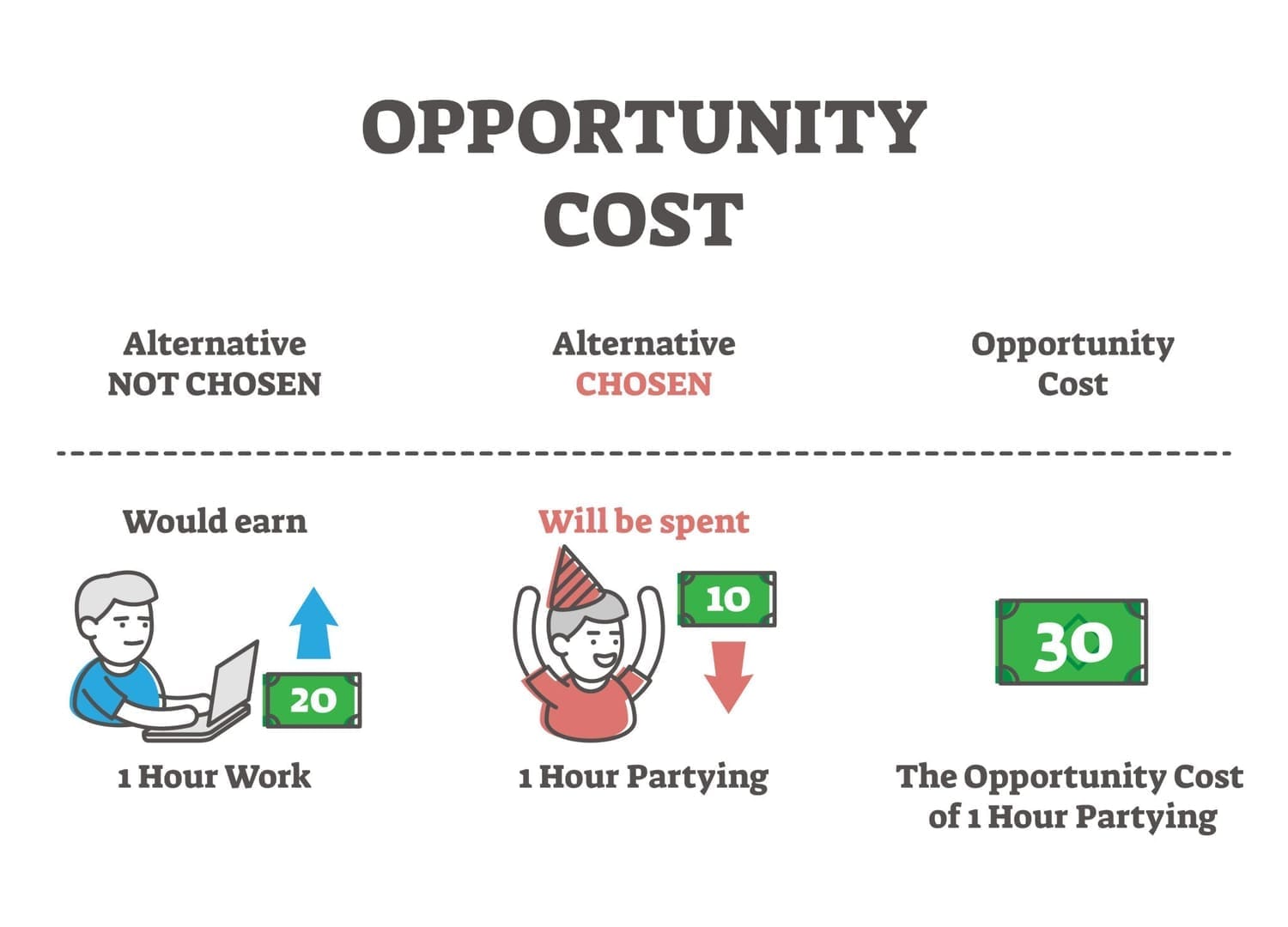
Opportunity Cost is the loss of potential gain from other alternatives when one alternative is chosen. It is the value of the next best alternative that you gave up. It is not always figured in currency; sometimes it costs your quality of life, your happiness, or your future prospects.
Charles Thomas Munger, a famous American investor and businessman, once said, "Intelligent people make decisions based on opportunity costs." This idea applies not just to multibillion-dollar investments, but to your morning routine, your free evenings, and your professional development budget.
What Are Three Types of Opportunity Costs?
Opportunity costs can be categorized based on the resources you trade away. The first type is Time, representing the hours you spent watching TV instead of taking that online business course. The cost here is the potential skills, certifications, or new business ideas you missed out on.
The second type is Money (Capital), which is the R5,000 you spent on a new gadget instead of using it to buy books and attend a local business conference. The cost of this choice is the knowledge, network connections, or revenue-generating skill you failed to acquire.
The final type is Lifestyle/Experience, which involves the decision to stay within your comfort zone instead of building up the courage to talk to a person about your business or delaying a meeting that may change your business forever. The actual cost here is the missed opportunity for a major deal, a dream vacation, or a life-altering partnership.
2. The High Cost of Inaction: Why Don't People Invest in Themselves?
If investing in yourself is famously called the "best investment by far" by people like Warren Buffett, why don't people invest in themselves? The answer is simple: the costs of self-investment are upfront, while the gains are delayed and invisible.
The Traps of the Present
The decision to avoid self-investment is driven by several common human instincts. Firstly, people cling to the Comfort Zone, often choosing the comfy full-time job they hate because the known devil is less scary than the unknown angel. The present reality even if it's miserable, feels safer than the temporary pain and effort required to change.
Secondly, the Immediate Cost of self-investment is tangible, as a R1,000 course means R1,000 less in your bank account today. This immediate, tangible loss is often more painful than the invisible, intangible loss of potential gain in the future.
Furthermore, Self-Doubt plagues many people, who feel they are "not an expert" or "don't know how to start a company," leading to analysis paralysis, which is simply a fancy term for delaying action.
Finally, Miscalculation is common, as most people working a full-time job never sit down and do the math; they never realize that the passive approach will take them 25 years to double their income, and that a calculated opportunity could cut that time by 80%.
The True Cost: The Opportunity Gap
The opportunity cost of not investing in yourself is the growing difference between the life you could have (your full potential) and the life you will have (your stagnant, current trajectory). This cost is silent, accumulating daily without any invoices or notifications.
3. The Loss of Potential Gain in Key Life Areas
The consequences of inaction ripple outward, impacting every critical aspect of your personal and professional landscape.
A. Career and Financial Opportunity Costs
When you decide not to learn a new high-demand skill, the cost is staggering. The result is Professional Stagnation, where you remain stuck in your current salary bracket while colleagues who invested in courses, certifications, or advanced degrees pull ahead. The cost is the thousands in yearly raises you miss out on. This can lead to Unreachable Goals; procrastinating over a long period of time can make it impossible to pay for your children's college education or secure your retirement, and these are massive, life-altering costs. Moreover, you incur Missed Business Opportunities when not considering other business opportunities or delaying a meeting that can prevent you from finding an avenue that could have doubled your income and cut your timeline to financial freedom by years. Not talking to a prospect about your opportunity can even prevent you from booking a dream vacation.
B. Personal and Quality of Life Costs
Opportunity cost is not always figured in currency. Sometimes, it costs your quality of life. The resulting Lost Personal Fulfillment occurs if you have a deep desire to start your own side venture but keep delaying. The cost is the loss of joy, passion, and purpose that working on your own project provides. The final and heaviest cost of inaction is Future Regret, which sets in years later when you look back and realize your life is smaller and less impactful than it could have been—this emotional debt cannot be paid off with money. Additionally, you face Quality of Life Trade-Offs because making unneeded mistakes in your business (due to lack of education) can make your goals unreachable, forcing you to sacrifice quality time with your family or friends just to fix errors.
4. Actions You Can Take to Find Your Opportunity (The Antidote to Inaction)
The key to achieving your dream life is to TAKE ACTION. Investing in yourself provides an excellent Return on Investment (ROI), not just in financial terms, but in overall quality of life, happiness, and a sense of fulfillment.
Strategy 1: Look for Opportunity
Before you can see an opportunity, you have to be looking for new opportunities. This requires you to actively seek out scenarios that can occur if you opt for one path over another. Ask yourself: "What outcome am I leaving on the table?"
If you don't want to miss out on another opportunity that may change the course of your life, start with the small things: Read books, watch webinars, listen to podcasts. This is the cheapest and fastest way to start investing in your knowledge.
Strategy 2: Be Willing to Read and Research
They say knowledge is power, and it's true. The less you know, the scarier the future looks. By educating yourself, you turn the scary "unknown" into the manageable "known."
If you can afford to invest a little bit in yourself, go to conferences, look at other opportunities. This is not a cost; it is The Best Investment You Can Make. As Warren Buffett said, skills and knowledge cannot be taxed or inflated away.
Strategy 3: Get Out of Your Comfort Zone
You have to go for it. You have to actively get out of your comfort zone because that is where the growth and opportunity lie. To do this, Make Contacts with people who have what you want; everything you desire, somebody else has it.
You need to connect with those people by going to networking events, sending cold emails, and asking for advice, as making contacts is how you access the invisible map to your future success.
Finally, Start Building by stopping to build your business in a lax manner. Delaying a meeting or not building up the courage to talk to a person about your business are high opportunity costs, and the only way to mitigate them is through action.
Conclusion: The Cost You Cannot Afford
We began by asking: "What is the cost of NOT investing in myself?"
The answer is clear: the cost is the version of your life that you will never get to experience. It is the dream business that stays a sketch in your notebook, the higher income that goes to someone else, and the regret that sets in years later. Most people in Network Marketing will never take the leap and go full time because they are too afraid to leave their stability.
The time to start mitigating this silent, persistent debt is now. The most financially intelligent decision you can make is to prioritize your personal and professional growth.
If you don't want to miss out on another opportunity that may change the course of your life, start with the small things. Download our FREE - PowerGoals eBook today to begin defining the life you refuse to forfeit.
General Disclaimer: Your Growth Compass is an educational and informational platform, not a registered financial advisory service. All cryptocurrency and investment information provided is for educational purposes only. Bitcoin and other digital assets are highly volatile and inherently risky. We are not liable for any financial losses, profits, or investment decisions you make. Always conduct your own due diligence or consult a certified financial professional before investing
Latest Articles



© 2025 Your Growth Compass SA All Rights Reserved